
NEWS
Breaking News: ANSI A137-1-2012 is here!
Revisions to ANSI A137.1, The American National Standard for Ceramic Tile, have now been officially approved, updating version 2008 to version 2012. The 2012 edition has ground breaking updates. Most importantly, the new version includes a new testing method and requirement for coefficient of friction.
What’s the Latest with USGBC and LEED
Earlier this year, USGBC announced a total footprint of 2 billion square feet in LEED certified projects, and an additional 7 billion square feeet of registered in-process LEED projects. As LEED’s profound marketplace influence continues to strengthen, many are wondering what new drivers will soon be introduced by USGBC and what impact these may have on the tile industry.
Federal Initiatives: Sustainable Product Procurement
In 2009 President Obama issued Executive Order 13514 for Federal Leadership in Environmental, Energy, and Economic Performance. This order required the Federal government to demonstrate leadership in the use of sustainable technologies and environmentally preferable materials, goods and services.
All Squared Away
With the launching of Green Squared® earlier this year, our industry has set sail and is ready to conquer new and exciting opportunities in the sustainability marketplace. With hundreds of products already certified and a warm reception by the A&D community thus far, the program is on course and running with great momentum. So, where are we with Green Squared today and what can be expected as we move through the second half of 2012 and into 2013 and beyond?
Testing for Fungi Resistance and Inhibition
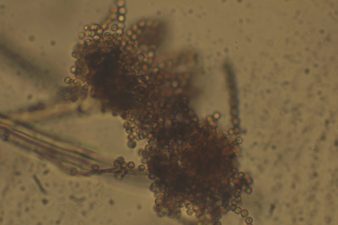
TCNA’s laboratory offers a full line of testing to assess a material’s ability to resist attack by fungi. ANSI A118.10.4 is the test method used to evaluate waterproof membrane for fungal resistance. ANSI A118.12.4.1 is the test method used to evaluate crack isolation materials for fungal resistance and ANSI A136.1.6.4 is the test method used to evaluate organic adhesives for fungal resistance. ASTM G21 is used to evaluate resistance of backing materials and polymeric synthetic materials to fungi. Let’s have a closer look at the fungi that are used in these tests.
What is Nominal Size?
Nominal size is defined in ANSI A137.1 Specification for Ceramic Tile as, “the approximate facial size or thickness of tile, expressed in inches or fractions of an inch (or in centimeters or millimeters) for general reference.” In other words, nominal size is the generic tile size which is usually noted on the tile box or on product data sheets. Typical nominal sizes are 8″x 8″, 12″x 12″, 16″x 16″, 24″ x 24″, etc.
Understanding the Technical Criteria of Green Squared®/ANSI A138.1 5th Section: Innovation
The ANSI A138.1 standard for sustainable tiles and tile installation materials establishes criteria for products throughout their full life cycle. Over the past several blog entries, we’ve reviewed the first four sections of the standard. This time, we’ll have a look at the fifth and final section, Innovation.
What is Caliber Range?
Caliber range is defined in ANSI A137.1 Specification for Ceramic Tile as, “an acceptable size range for tiles to be used in the same installation.” In other words, this is what determines how much size variation can exist between tiles on the same job. This is important as it relates to whether or not the layout of an installation looks good with even joints throughout.
Membrecia
Natural vs. Calibrated vs. Rectified Tiles
Did you know that the requirements in ANSI A137.1 Specifications for Ceramic Tile for dimensional variation depend not only on the type of tile (i.e. pressed floor tile, porcelain tile, etc.) but also how the edges have been finished or how they’ve been sorted in the factory?